
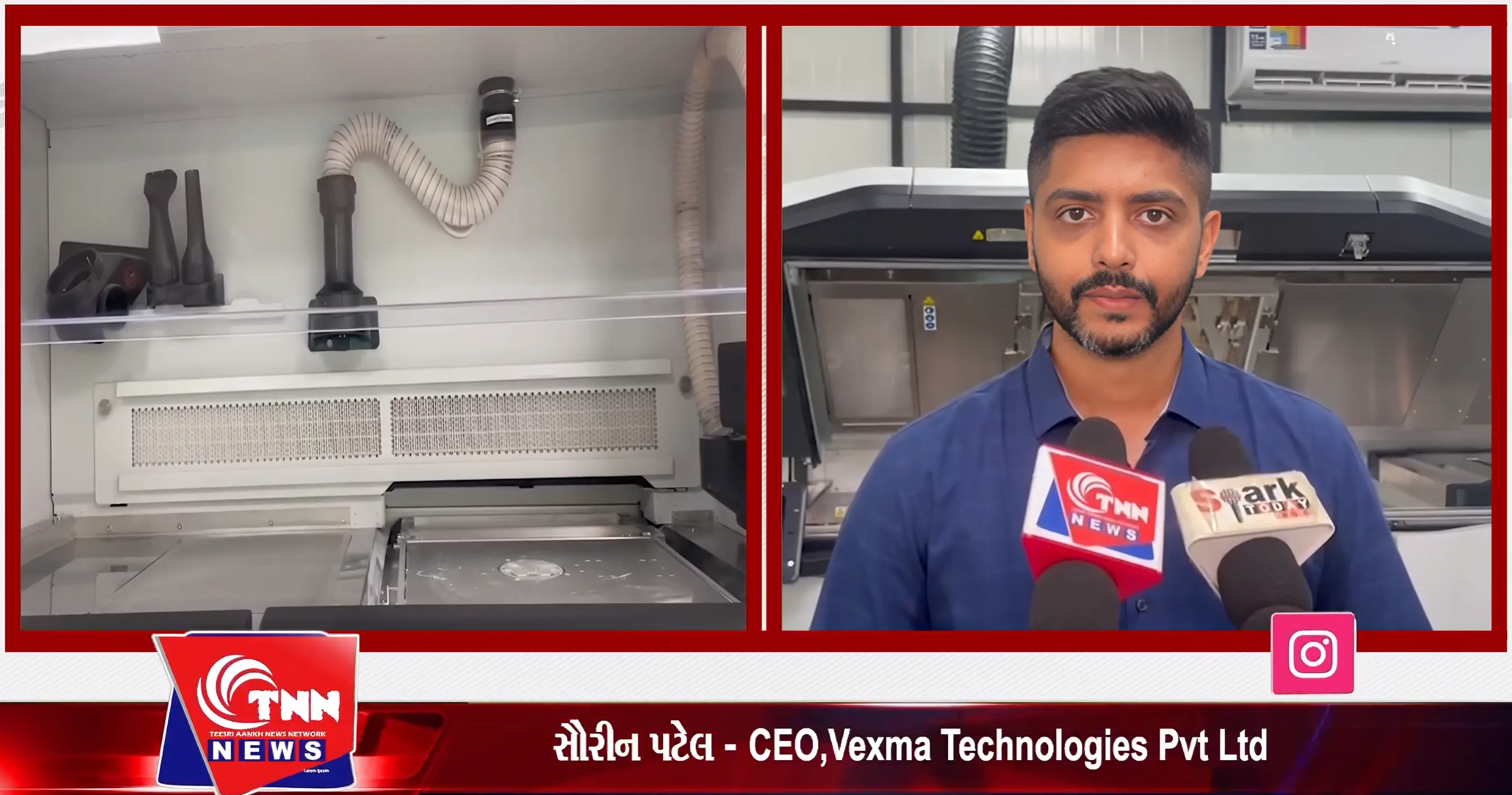

Why Ti6Al4V is the Preferred Titanium Alloy for High-Performance Metal 3D Printing
Metal additive manufacturing has transformed how high-performance components are designed and. Among the many metal alloys available for 3D printing, Ti6Al4V (Grade 5 Titanium) has become one of the most widely used materials across aerospace, medical, automotive, defence, and industrial engineering.
Its combination of high strength, low weight, corrosion resistance, and biocompatibility makes it an ideal choice for applications where conventional manufacturing methods often face limitations.
This article explores why titanium 3d printing is preferred for metal 3D printing and where it delivers the greatest value.
What is Ti6Al4V?
Unlike pure titanium, Ti6Al4V provides significantly higher strength while maintaining excellent corrosion resistance and fatigue performance. Some more advantages are as below:
1. Excellent Strength-to-Weight Ratio
One of the biggest advantages of Ti6Al4V is its exceptional strength while remaining nearly 40–45% lighter than steel.
This makes it suitable for applications where reducing weight directly improves efficiency, such as:
• Aerospace brackets
• UAV components
• Motorsport parts
• Robotic assemblies
• Lightweight industrial equipment
Lower weight often contributes to improved fuel efficiency, better payload capacity, and reduced energy consumption.
2. Complex Geometries Without Compromising Strength
Traditional machining can make intricate titanium components expensive and time-consuming to produce. Metal 3D printing enables engineers to manufacture:
• Internal cooling channels
• Lattice structures
• Lightweight ribs
• Organic geometries
• Consolidated multi-part assemblies
These features help reduce material usage while maintaining structural integrity.
3. Excellent Corrosion Resistance
Ti6Al4V naturally forms a protective oxide layer that resists corrosion in demanding environments. This makes it suitable for components exposed to:
• Marine environments
• Chemicals
• Moisture
• High humidity
• Biomedical applications
The alloy performs reliably even in challenging operating conditions where many conventional metals require protective coatings.
4. High Temperature Performance
Many engineering applications operate under elevated temperatures. Ti6Al4V retains its mechanical properties at temperatures higher than aluminum alloys, making it suitable for:
• Engine components
• Aerospace hardware
• Industrial machinery
• High-performance automotive systems
The alloy performs reliably even in challenging operating conditions where many conventional metals require protective coatings.
5. Excellent Fatigue Resistance
Components subjected to repeated loading require materials capable of maintaining long-term performance.Ti6Al4V offers strong fatigue resistance, making it suitable for:
• Aircraft components
• Robotic joints
• Medical implants
• Industrial fixtures
• Performance automotive parts
Advantages of Ti6Al4V in Additive Manufacturing
Compared to conventional manufacturing, metal 3D printing allows engineers to unlock additional benefits.
• Design Freedom: Complex geometries can be manufactured directly from CAD without multiple machining operations.
• Part Consolidation: Multiple assemblies can often be redesigned as a single printed component, reducing fasteners and simplifying assembly.
• Reduced Material Waste: Titanium is an expensive material. Unlike subtractive machining, where large amounts of material are removed, additive manufacturing builds components layer by layer, improving material utilization.
• Faster Product Development: Functional titanium prototypes can be produced without tooling, allowing engineers to validate designs before production.
Common Applications of Ti6Al4V
Compared to conventional manufacturing, metal 3D printing allows engineers to unlock additional benefits.
• Aerospace: The aerospace industry uses Ti6Al4V for components that demand lightweight construction and high mechanical performance.
• Medical: Its excellent biocompatibility makes Ti6Al4V suitable for medical applications such as: Orthopedic implants, Surgical instruments, Dental components, Patient-specific implants
• Automotive & Motorsport: High-performance vehicles benefit from titanium's lightweight properties.
• Industrial Engineering: Industrial manufacturers use Ti6Al4V for: Custom tooling, Precision fixtures, High-strength machine components,& Automation systems
Design Considerations for Ti6Al4V 3D Printing
To maximize performance, engineers should consider Design for Additive Manufacturing (DfAM) principles. Some important considerations include:
• Optimizing wall thickness
• Minimizing unsupported overhangs
• Using lattice structures where appropriate
• Designing for post-processing access
• Considering build orientation to optimize strength and surface finish
Applying these principles can improve part quality, reduce support structures, and shorten production time.
Conclusion
Ti6Al4V has become the benchmark titanium alloy for metal additive manufacturing because it combines lightweight performance, mechanical strength, corrosion resistance, and design flexibility.
When paired with metal 3D printing, engineers gain the ability to manufacture complex, high-performance components with reduced material waste and shorter development cycles.
Whether developing aerospace parts, medical devices, automotive components, or industrial tooling, Ti6Al4V provides a reliable solution for demanding engineering applications.
At Vexma Technologies, we manufacture precision metal 3D printed components in Ti6Al4V using advanced additive manufacturing processes, helping businesses accelerate product development and produce complex metal parts with confidence.