
How to Select the Right 3D Printing Technology for Your Part
Choosing the right 3D printing technology directly impacts the quality, performance, cost, and lead time of your part. From prototypes to functional components and low-volume production, different applications require different manufacturing processes.
With technologies such as FDM, SLA, SLS, HP Multi Jet Fusion (MJF), and DMLS, manufacturers have multiple options for producing polymer and metal parts. For businesses exploring 3D printing services in India, understanding these technologies can help identify the right combination of material, performance, accuracy, production volume, and cost.
Why Does 3D Printing Technology Selection Matter?
Not every 3D printing process is suitable for every application. A visual prototype may prioritize surface finish and detail, while a functional component may require strength, temperature resistance, or dimensional stability.
The right technology can help manufacturers:
- • Accelerate product development
- • Reduce prototype iterations
- • Produce complex geometries
- • Minimize tooling requirements
- • Manufacture customized components
- • Support low-volume production
Key Factors to Consider
1. Understand the Application
• Start by defining what the part needs to do.
• Is it a visual or functional prototype?
• Will it experience mechanical loads?
• Does it require heat or chemical resistance?
• Is it intended for final use?
• How many parts are required?
This makes it ideal for components used in chemical processing equipment, marine systems, pollution control equipment, and industrial fluid handling.
2. Select the Right Material
Material selection directly affects part performance. Industrial 3D printing services can provide engineering polymers and metals depending on the technology. Materials such as PA12 Nylon, PA11, SS316L, 17-4PH stainless steel, tool steel, titanium, aluminum, maraging steel, and nickel-based alloys can be considered for different applications.
• Tensile strength
• Impact resistance
• Temperature resistance
• Chemical resistance
• Flexibility
• Wear resistance
The material and printing technology should be selected together.
3. Consider Part Geometry
A major advantage of additive manufacturing is the ability to produce complex geometries that can be difficult or expensive to manufacture conventionally.
• Internal channels
• Lattice structures
• Lightweight components
• Complex curves
• Customized parts
• Consolidated assemblies
Wall thickness, orientation, tolerances, and post-processing should also be considered during technology selection.
4. Compare 3D Printing Technologies
Fused Deposition Modeling (FDM) is commonly used for concept models, basic prototypes, fixtures, jigs, and early-stage product development. It is a practical option when cost-effective prototyping is the primary requirement.
Stereolithography (SLA) uses photopolymer resin to produce parts with fine details and smooth surfaces.
Selective Laser Sintering (SLS) uses polymer powder to produce functional components with complex geometries.
It is suitable for functional prototypes, customized components, and low-volume production.
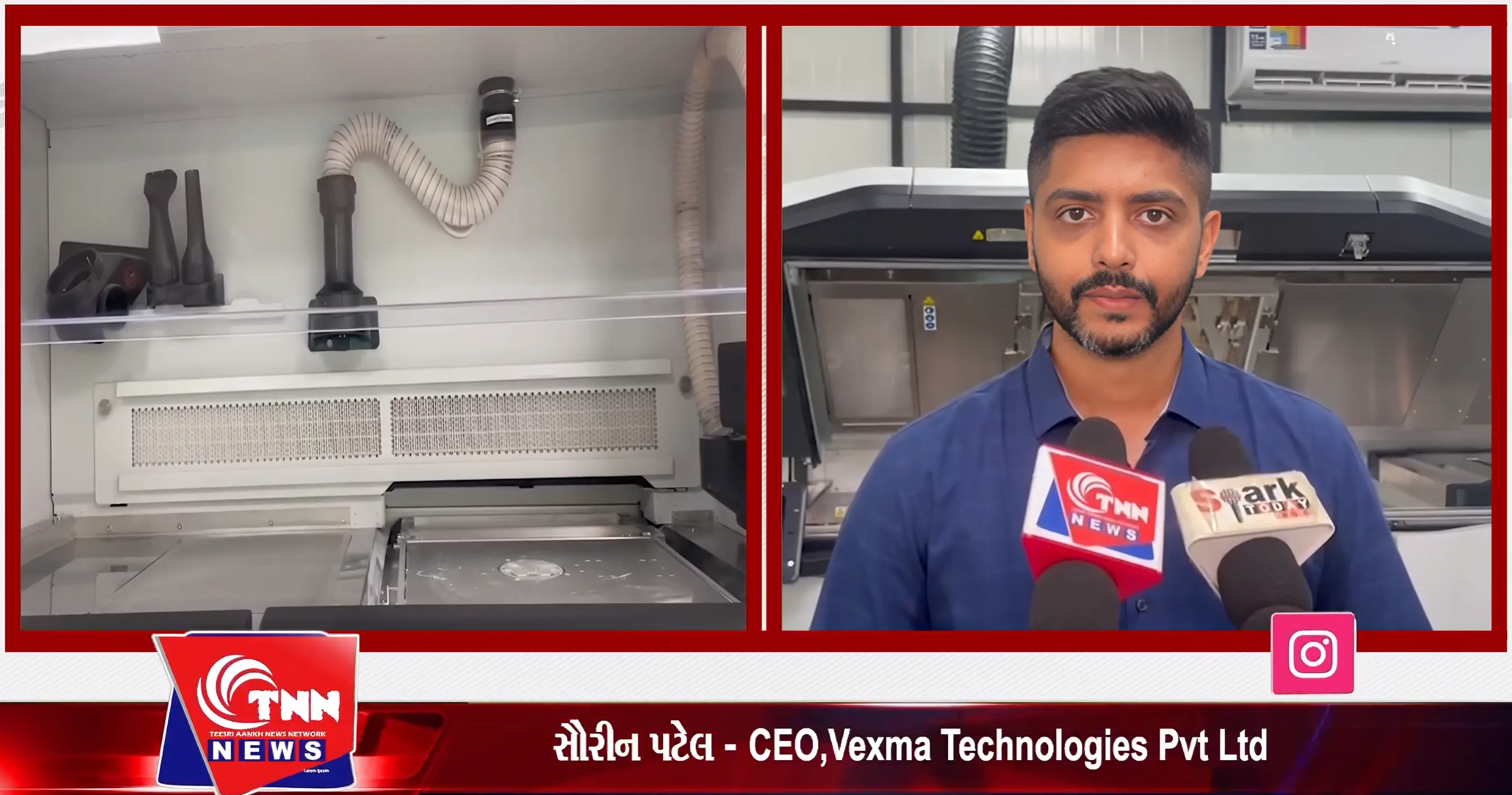
MJF is an industrial polymer 3D printing technology suited for functional prototypes and production-grade components. PA12 Nylon is widely used for housings, brackets, covers, enclosures, ducts, and other functional components.
Direct Metal Laser Sintering (DMLS) is used to produce complex metal components directly from digital designs. Materials such as SS316L, 17-4PH, tool steel, titanium, aluminum, and maraging steel can be used depending on the application. For manufacturers evaluating metal 3D printing in India, DMLS can provide an alternative for producing complex metal components without conventional tooling.
How to Choose the Right 3D Printing Technology
A simple selection approach is:
Application → Material → Geometry → Performance → Accuracy → Quantity → Cost → Lead Time → Post-Processing
The objective is to select the technology that provides the right balance of performance, cost, accuracy, material properties, and production requirements.
From Prototype to Production
Modern 3D printing solutions can support multiple stages of product development, from initial prototypes to functional testing and low-volume production.
A typical workflow is:
CAD Design → Technology Selection → Material Selection → Prototype → Testing → Design Iteration → Production
Working with a service provider offering multiple technologies can simplify the process of matching a part with the appropriate manufacturing method.
Choosing a 3D Printing Service in India
When selecting a 3D printing service in India, consider more than technology availability. Look for a manufacturing partner that can provide:
• Multiple 3D printing technologies
• Engineering materials
• Prototype and production capabilities
• DfAM support
• Post-processing
• Quality inspection
• Support for complex geometries
For businesses in Gujarat, a 3D printing service in Gujarat can also provide convenient access to industrial additive manufacturing for local projects.
Conclusion
Selecting the right 3D printing technology requires evaluating the complete application - not just the printing process.
Whether you need a prototype, functional polymer component, customized part, or complex metal component, the right additive manufacturing process can help reduce development time and support the transition from prototype to production.
For businesses evaluating 3D printing services in India, VexmaTech offers multiple manufacturing technologies to help match the right process to the right application.