3D Printing in Metal
Transforms digital designs into precise metal parts with unparalleled speed and precision.

With 10+ years of industrial experience, Vexma Technologies stands at the forefront of turning innovative concepts into tangible solutions. Specializing in cutting-edge 3D printing technologies, we deliver the finest prototyping solutions. Our commitment to excellence shines through in every project we undertake.
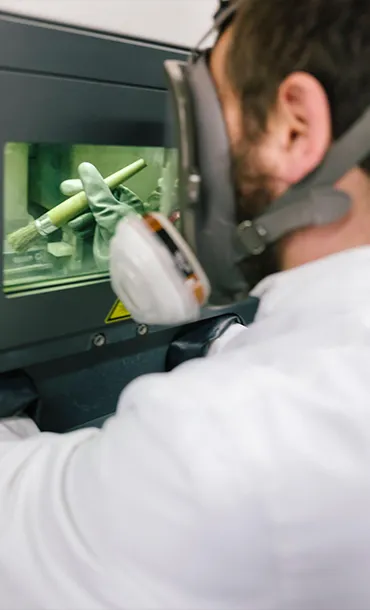


Transforms digital designs into precise metal parts with unparalleled speed and precision.

Utilizes SLA, MJF, FDM, and SLS technologies to create customized plastic designs with efficiency and versatility.

Producing high-quality components cost-effectively in small-batch production runs, offering diverse materials & finishes.

Optimizing product performance using FEA and CFD to assess structural integrity and fluid flow.

Integrating market research, CAD modeling, and Rapid Prototyping for a seamless journey from idea to market-ready solutions.

Replicating components using 3D scanning and modeling, facilitating product enhancements or replication.
Happy Clients
Project Complete
Years Of Experience
Parts Printed

Get More Technical Updates
With Our 10+ Years of Expertise, We are your trusted partners in turning your visions into tangible prototypes.
Get Every Single Updates
Talk to Sales
3D Printing, or Additive Manufacturing, has profoundly impacted numerous industries, revolutionizing traditional production methods.
In Aerospace, it enables the creation of lightweight and intricate components, enhancing fuel efficiency and performance without Compromising it’s strength.
The Healthcare and Medical sectors benefit from 3D printing's capability to produce custom implants, prosthetics, and even organs.
Automotive Manufacturers utilize it for rapid prototyping, customized parts, and the production of lightweight components, contributing to enhanced vehicle efficiency.
In Consumer Goods (FMCG), 3D printing allows for personalized designing and On-Demand low batch manufacturing resulting in companies to quickly iterate and test product designs, ensuring efficient development processes.
The Robotics Industry leverages its flexibility to produce complex and tailored components, fostering innovation.
Electrical Vehicle(EVs) manufacturers benefit from the lightweight and efficient designs achievable through 3D printing.
In the Defense Sector, it facilitates rapid prototyping, on-demand spare part production, and the creation of specialized components.
The Drone Industry utilizes 3D printing for lightweight structures and intricate designs, optimizing performance