
Explore how additive manufacturing is transforming automotive and EV production with faster prototyping, lightweight parts, and scalable manufacturing.
Get Your Instant Quote
The automotive industry is undergoing a rapid transformation driven by electrification, lightweighting, faster product cycles, and the need for cost-efficient customization. Today, automotive manufacturing companies, auto parts manufacturers, and automotive parts suppliers are increasingly adopting 3D printing in the automotive industry to stay competitive.
Vexma is an India-based advanced manufacturing partner helping automotive and EV engineering teams move from design to production with confidence. From early-stage prototyping to production-ready automotive components, we deliver end-to-end advanced manufacturing aligned for real-world performance. Our capabilities span polymers to metals, low-volume to serial production, and design-for-manufacturability to final execution - all under one roof.
With a multi-technology, single-partner model, Vexma eliminates fragmented vendor dependencies. Design, 3D printing, finishing, and production are managed as one integrated system, ensuring faster decisions, tighter quality control, and predictable outcomes for automotive OEMs, Tier-1 suppliers, and EV manufacturers.
Automotive 3D printing allows manufacturers to move beyond traditional constraints. With industrial 3D printing, complex geometries, lightweight lattice structures, and functional prototypes can be produced quickly and accurately.
Key benefits include:
• Faster time-to-market with automotive rapid prototypingThis makes 3D printing automotive parts ideal for both legacy OEMs and next-generation electric vehicle manufacturing companies.
3D printed car parts are widely used for:
• Engine prototypesThese prototypes enable design validation, fitment testing, and functional trials before mass production.
Automotive factories rely on 3D printing jigs and fixtures automotive for:
• Assembly alignment toolsThis improves shop-floor efficiency while reducing lead times and tooling costs.
With advanced materials, 3D printed automotive parts can now be used directly in vehicles:
• 3D printing brackets automotiveThese applications demonstrate how additive manufacturing automotive applications are moving from prototyping to production.
Metal 3D printing in the automotive industry enables high-strength, lightweight components that are impossible to manufacture conventionally.
• Porsche: DMLS pistons for the 911 GT2 RS with optimized internal cooling and reduced weight
• Audi: Metal 3D-printed suspension components improving performance and durability
• General Motors: Lightweight seat brackets reducing vehicle weight and improving fuel efficiency
• Bugatti: DMLS brake calipers for enhanced safety and performance
These examples highlight how automotive additive manufacturing is redefining performance and design standards.
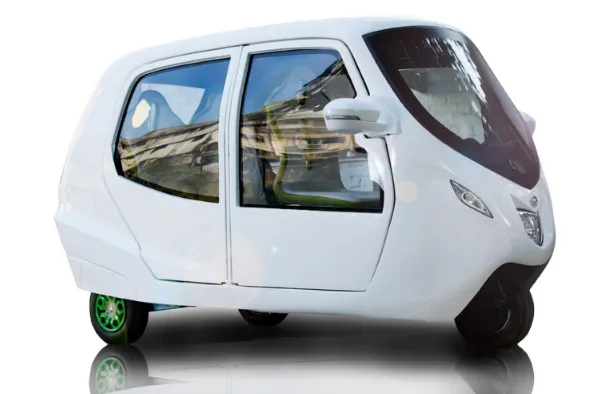
Vexma Technologies has successfully demonstrated real-world automotive use through the Valeo E-Rickshaw project. Using advanced 3D printing services in India, Vexma supported the development of a functional electric vehicle prototype with optimized components and rapid turnaround.
This project highlights how 3D printing in the EV industry enables faster product validation, design flexibility, and cost-effective development for emerging mobility solutions.
Learn more about the project here: https://vexmatech.com/valeo-e-rickshaw
With Vexma’s online 3D printing services, automotive and EV manufacturers achieve lighter components, stronger designs, faster prototyping, and scalable production without the limitations of traditional tooling. This modern manufacturing approach enables teams to innovate quickly, optimize performance, and reduce both development time and costs across the entire vehicle lifecycle.
The rise of the electric vehicle industry has further accelerated adoption of 3D printing for EV manufacturing.
Applications include:
• Electric vehicle components and enclosures3D printing is redefining how automotive industry companies design, prototype, and manufacture parts. As detailed in our dedicated guide on 3D Printing in the Automotive Industry, additive manufacturing delivers measurable advantages across the automotive value chain.
• Rapid Prototyping & Faster Time-to-Market: Automotive rapid prototyping enables engineers
to test designs, validate fitment, and iterate quickly without tooling delays.
• Cost-Effective Low-Volume Manufacturing:Ideal for custom 3D printed
car parts, pilot runs, and niche vehicle programs.
• Lightweight & Optimized Structures:Topology-optimized components reduce
vehicle weight, improving fuel efficiency and EV range.
• Complex Geometries Without Tooling: Enables advanced housings, brackets, connectors,
and functional snap-fit prototypes.
As innovation in the automotive industry accelerates, 3D printing in cars will continue to expand from 3D printed parts in automotive industry workflows to full-scale production applications.
For OEMs, Tier-1 suppliers, and EV startups, automotive 3D printing is no longer optional; it's a strategic advantage.
Partner with Vexma Technologies to accelerate your automotive and EV innovation journey with cutting-edge additive manufacturing in automotive industry solutions.
Happy Clients
Project Complete
Years Of Experience


With Our 10+ Years of Expertise, We are your trusted partners in turning your visions into tangible prototypes.
Get Every Single Updates
Talk to our experts